Wolf repair
Weak draw, noise, stuck downdraft
Wolf hood repair for wall, island and downdraft ventilation
A Wolf hood works for the whole kitchen, not just the burners under it. When it falters, smoke drifts toward the family room, grease settles on the cabinets and the windows fog up. A clogged filter that needs a wash is the first thing to rule out; past that, the cause can be a motor, a relay or a lift mechanism. Northland Kitchen Service helps owners across the North Shore of Chicago tell the two apart, then repairs what is truly broken.
Airflow is the whole job
A Wolf pro wall hood, an island hood, a hood insert hidden in custom cabinetry and a downdraft that rises behind the cooktop all do the same thing: a blower pulls air through grease filters and pushes it out through a duct, or through charcoal filters and back into the room on recirculating setups. Every complaint we hear traces back to one link in that chain: the filter, the blower and its wheel, the controls that tell the blower what to do, or the duct carrying air outside.
That is why we start a ventilation call by measuring and listening rather than by unscrewing panels. A blower that hums but barely moves air, a fan that roars on low, and a hood that pulls well until the filters clog all sound alike from across the room, yet each points to a different part. Working out which link is weak saves you paying for a motor when a soak in hot water would have done.
Hood problems rarely travel alone. Poor capture over a powerful Wolf range or cooktop leaves grease on knobs and burner caps, so our technician will mention anything worth a look on the cooking side while there. The $89 trip charge covers the whole visit, however many Wolf appliances get checked.
Signs of trouble, from hood to blower
Match what you notice to the most likely cause, then use the checklist further down to rule out plain grease before you call.
-
Smoke and steam escape past the hood edges
Likely cause: Clogged filters first; after that a tired blower motor, a damaged fan wheel or a restricted duct
-
Rattle, roar or whine that got worse over weeks
Likely cause: Fan wheel out of balance or caked with grease, worn motor bearings, or loose housing screws
-
Hood lights out while the fan still runs
Likely cause: Lamp, socket or the wiring feeding the light circuit
-
Buttons or knob do nothing at all
Likely cause: Control board, switch assembly, or lost power supply to the hood
-
Blower keeps running after you switch it off
Likely cause: A relay or switch stuck closed on the control board
-
Filters will not seat, or fall out after cleaning
Likely cause: Bent filter frame, worn latch or a filter put back in the wrong orientation
-
Downdraft will not rise, stalls halfway or will not lower
Likely cause: Lift motor, drive gear or track, or a limit switch that lost its position
Short answerWolf hood lights on but the fan won't run: what failed?
If neither fan nor lights respond, check the breaker first, then suspect the control board or switch assembly. If the lights work but the fan is silent, the blower motor, its capacitor or a relay has usually failed. A hood that runs but barely pulls is more often clogged filters or a restricted duct.
Filter care that keeps the blower healthy
Filters are the cheapest part of the system and the one most often neglected. Clogged filters force the blower to work against a wall of grease, which shortens motor life and drags down capture.
| Filter type | Where you find it | What to do | How often |
|---|---|---|---|
| Metal grease filters (mesh or baffle) | Ducted hoods, inserts and downdrafts | Remove and wash in hot, soapy water; let them dry fully | About once a month with regular cooking, sooner after frying or searing |
| Charcoal (carbon) filters | Recirculating setups that return air to the room | Replace; washing does not restore them | Every 6 to 12 months, depending on how much you cook |
| Downdraft intake filters | Behind the rising panel of a downdraft | Same washing routine as other metal filters | Monthly, and after any boil-over or grease spill |
Short answerWhy is my Wolf downdraft not rising?
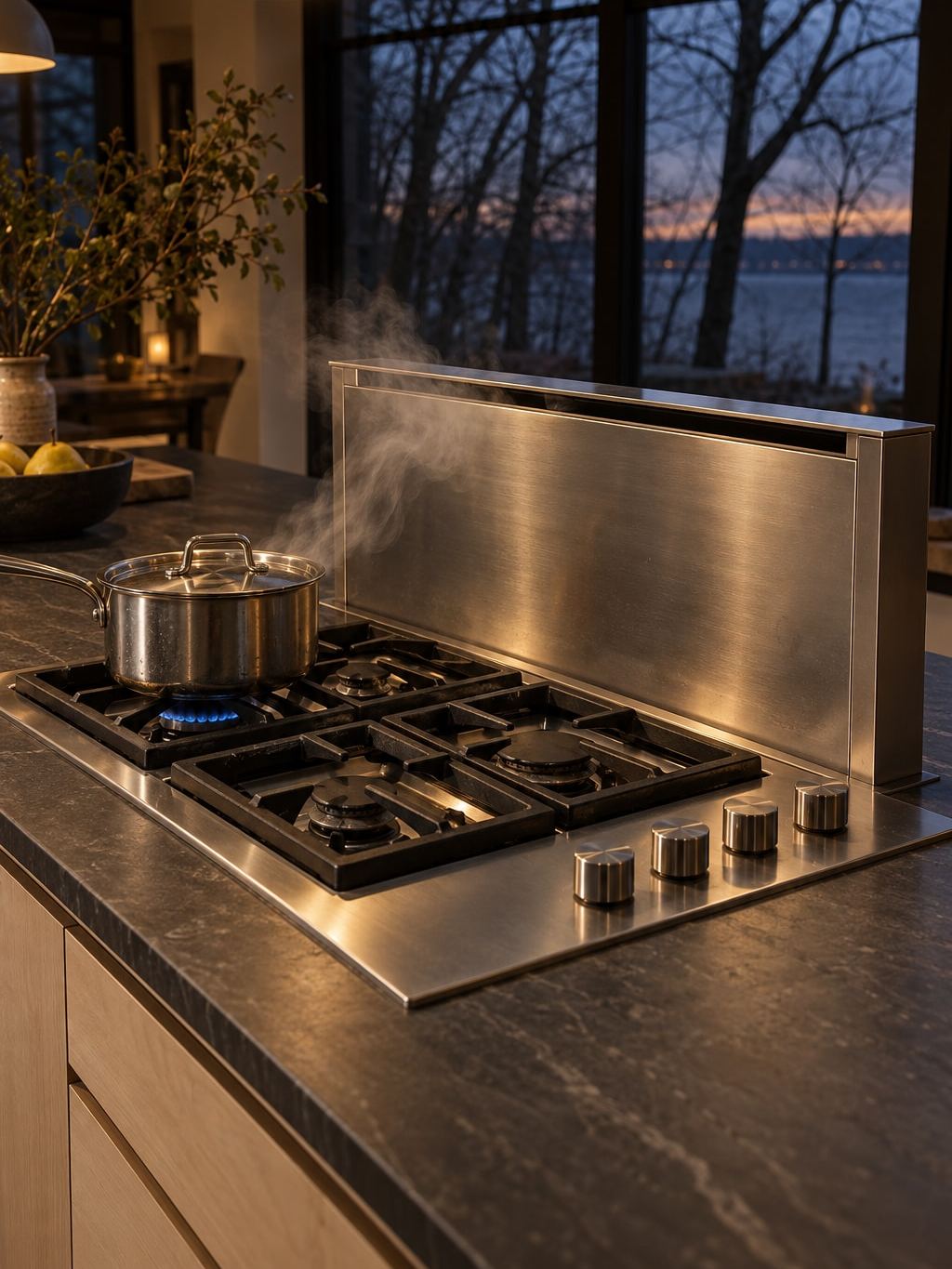
A downdraft that will not lift usually has a failed lift motor, a stripped drive gear, debris in the track, or a limit switch that no longer reads its position. Try switching it off at the breaker for a minute to reset it. If it still stalls, stop pressing the button repeatedly and book a technician.
Grease or a real breakdown?
Run through these before you book. If every box is ticked and the problem is still there, the fault is mechanical or electrical and needs a technician.
- Filters washed and fully dry within the last month, and seated the right way round
- Charcoal filters, if your hood recirculates, changed within the past year
- Breaker for the hood switched off for a minute and back on
- Fan tried on every speed: a fault on one speed only points to controls, a fault on all speeds points to the motor
- Outside damper flap checked, if you can see it from the yard, for a bird nest or ice in winter
- Downdraft track checked by eye for a fallen utensil or spilled food
- Noise compared with filters out and in, so you know whether the rattle lives in a filter or in the blower
Bigger is not automatically better
-
Often heardThe more powerful the hood, the cleaner the kitchen.
In practiceCapture depends on matching airflow to the burners, the hood size and the duct. A common industry rule of thumb is about 1 CFM of airflow for every 100 BTU of gas burner output, so 60,000 BTU of burners calls for roughly 600 CFM. Oversized blowers can be noisy, may need make-up air under local code, and still miss smoke if the hood is too narrow.
-
Often heardA loud hood just means it is working hard.
In practiceA healthy Wolf blower sounds like steady rushing air. Rattles, grinding or a rising whine are mechanical wear, and they tend to get worse until the motor quits.
-
Often heardIf the fan spins, the hood is fine.
In practiceA blower can spin with a grease-caked wheel or a crushed duct and move only a fraction of the air it should. Watch where the steam goes, not just whether the fan turns.
What shapes the cost of a hood repair
There is no set price list, and we do not guess one over the phone. The $89 trip charge is credited toward the repair, and the exact figure comes after inspection, before any part is replaced.
- Which part failed
- A lamp or a filter latch is a far smaller job than a blower motor, a control board or a downdraft lift assembly.
- Hood format
- Wall hoods, island hoods, inserts behind cabinetry and downdrafts each come apart differently, and access affects labor time.
- Mounting height and access
- A tall island hood over stone needs more setup and protection than a wall hood at standard height.
- Part availability
- Common parts may be on the truck; less common motors or boards are ordered, which adds a second visit.
- What sits beyond the hood
- If the duct or the outside damper is the restriction, we show you where and explain your options before any work begins.
Washing metal hood filters the right way
This monthly routine keeps most airflow complaints from ever starting. Do it with the hood off and the cooktop cold.
-
Release the filters
Slide or tilt each filter out using its handle or latch. Support it from below; a greasy filter is heavier and more slippery than it looks.
-
Soak in hot, soapy water
Use a sink or tub large enough to submerge the filter, with hot water and a grease-cutting dish soap. Let it soak for a while to loosen buildup.
-
Brush, do not scour
Use a soft brush along the baffles or mesh. Steel wool and harsh abrasives scratch the finish and can bend thin mesh.
-
Rinse and dry completely
Rinse with hot water and let the filters dry fully before reinstalling, so water does not drip into the blower or onto the lights.
-
Reseat and test
Fit each filter the right way round until it sits flush, then run the fan on high and watch the steam from a pot of boiling water. If capture is still weak, it is time to book a visit.
Short answerWhat causes a loud noise from a Wolf hood blower?
A loud Wolf blower usually means a fan wheel thrown out of balance by grease, worn motor bearings, loose mounting hardware, or debris drawn into the housing. Clean filters rule out the simple cause. Grinding or a rising whine points to bearing wear, which needs a technician before the motor fails completely.
Hood and downdraft questions
- How long does a Wolf hood repair take once the technician arrives?
- Most hood repairs are done within about an hour. Replacing a blower motor can take up to an hour and a half, depending on how the hood is mounted and how easy the motor is to reach. If a part has to be ordered, we schedule a return visit and tell you the expected wait.
- Do you repair Wolf downdraft vents that are built into an island?
- Yes. We service the lift mechanism, blower, controls and filters on Wolf downdrafts. Island installs often hide the blower inside the cabinet below, so clearing the cabinet in advance makes the visit quicker.
- My hood fan works but the light does not. Is that worth a service call?
- If it is only a lamp, you may be able to swap it following your owner's manual. If a new lamp does not help, the socket or wiring is at fault, and a technician should look at it. The $89 visit can cover the hood and any other Wolf appliance in the kitchen.
- Can a clogged hood affect my Wolf range or cooktop?
- Indirectly, yes. Weak capture lets grease settle on knobs, burner caps and control panels, and heat that should be pulled away lingers around the cooking surface. Keeping the hood healthy protects the appliances under it.
- Can you tell me which hood size I need for a new range?
- We repair existing Wolf ventilation rather than plan new installations. Our article on why kitchen ventilation matters explains the general sizing logic, and for a new install your kitchen designer or installer is the right person to ask.
- Is there anything I should do before the technician comes?
- Wash or remove the filters if you can, clear the counter below the hood, and empty the cabinet under a downdraft. Note which fan speeds misbehave and whether the noise changes with filters out. Then call (773) 830-2960 or book online, and see how the trip charge works on our pricing page.
Bring the airflow back
(773) 830-2960Phone lines are answered 24/7, and technicians visit every day, 8 AM to 6 PM. One $89 trip charge, credited toward the repair, with the exact price given after inspection. Questions first? Use our contact page.
Book a visit