Wolf repair
Brew unit, grinder, milk, water, electronics
Repair for the Wolf Coffee System Built Into Your Cabinetry
A Wolf built-in coffee system packs a grinder, a pump, a heater, a brew unit and a milk circuit into one cabinet opening, and two everyday ingredients wear it down: hard water and milk. Northland Kitchen Service repairs these machines across the North Shore of Chicago with the cabinetry in mind, protecting wood panels and stone while the unit comes out, and naming the exact repair cost before any part is replaced.
Short answerWhy is my Wolf built-in coffee system not dispensing?
When the grinder runs but nothing reaches the cup, the brew unit is usually clogged with old grounds or scale, the water circuit is blocked by mineral buildup, or the pump has weakened. Check that the tank is seated and full and the brew unit is clean. If it still will not pour, the internal circuit needs a technician.
When the morning cup goes wrong
Each complaint below maps to a part of the machine. We use it to plan the visit; testing on site confirms the part before anything is ordered.
-
Grinder sounds normal, but no coffee comes out
Likely cause: Clogged or misaligned brew unit, scale in the water path, or a weak pump
-
Grinder silent, jams or makes a harsh clatter
Likely cause: Grinder motor, a foreign object such as a small stone in the beans, or worn burrs
-
Milk will not froth, or comes out thin and lukewarm
Likely cause: Dried milk in the frother or tubing, a blocked steam path, or a failing milk-circuit valve
-
Water on the cabinet floor or under the drip tray
Likely cause: Worn internal seals, a loose hose connection or a cracked water tank
-
Coffee tastes weak or watery
Likely cause: Grind setting drifted, low pump pressure, a dirty brew unit, or scale cutting flow and temperature
-
Descale warning will not clear after descaling
Likely cause: Heavy mineral buildup the home program could not dissolve, or a sensor or electronics fault
Myths that shorten a coffee system's life
-
Often heardVinegar descales just as well as the recommended descaler, and it is cheaper.
In practiceVinegar is not what the machine was designed for. It can attack rubber seals and internal parts, leave a smell and taste in the water path, and still miss scale deep in the heater. Use the descaler named in your owner's manual and the machine's own descaling program.
-
Often heardIf the milk tastes fine, the frother is clean.
In practiceMilk film dries inside tubing and the frother long before you can taste it, and that film is what blocks the steam path. Rinse and clean the milk circuit every time you use it, not just when it stops working.
-
Often heardThe descale light is just a reminder and can be ignored for a while.
In practiceOn the North Shore, where water in many towns is hard, scale builds fast. Every week the warning is ignored, more minerals settle in the heater and valves, and the job shifts from a home program to a professional repair.
Short answerWhy is my Wolf coffee maker grinder not working?
A silent grinder points to a failed motor, an electrical fault or a jammed hopper. A grinder that runs but clatters or stalls usually has caught a foreign object or has worn burrs. Do not reach into the grinder. Switch the machine off and book a technician to clear and test it.
Five parts, five ways to fail
A built-in Wolf coffee system is five working assemblies in one box. Knowing which one is at fault keeps the repair focused on that part alone.
| Assembly | What it does | How it usually fails | What the technician checks |
|---|---|---|---|
| Brew unit | Tamps the grounds, brews and ejects the puck | Packed with old grounds or scale, worn seals, stiff movement | Removal, cleaning, seal condition, smooth cycling |
| Grinder | Grinds beans to the set fineness | Motor failure, jams, worn burrs, setting drift | Motor operation, burr wear, grind consistency |
| Milk system | Draws, heats and froths milk | Dried milk blocking tubes and frother, failing valve | Steam path, tubing, valve function |
| Water circuit | Pump, heater, valves and hoses that move hot water | Scale buildup, weak pump, leaking hose or seal | Flow and pressure, scale level, leak source |
| Electronics | Controls, sensors and the display | Stuck warnings, unresponsive buttons, error messages | Sensor readings, control board, wiring |
Rinsing the milk system after every use
Milk left to dry inside the system is a classic cause of frother trouble, so a quick rinse after each drink is worth the habit. Follow your owner's manual for your exact model; the routine below shows the idea.
-
Run the rinse program right away
As soon as you finish a milk drink, run the machine's milk rinse or clean cycle while the residue is still fresh and liquid.
-
Put the milk back in the cold or pour it out
Milk left sitting in a container at room temperature turns quickly and coats the tubing.
-
Take apart the removable milk parts daily
Detach the frother parts and tubing that your manual says are removable, and wash them in warm, soapy water.
-
Use the cleaner the manual recommends
For the periodic deep clean, use the milk-system cleaner named in your manual rather than household products that can damage seals.
-
Reassemble and run one more rinse
Fit every part back fully, then rinse once more. If milk still froths poorly, the blockage is internal and it is time to book a visit.
Getting the kitchen ready for the visit
Built-in machines are serviced inside finished cabinetry, so a little preparation protects your kitchen and shortens the job.
- Clear the counter in front of the coffee system so there is room to set the unit down on a protective pad
- Remove decorative items from shelves directly above and below the cabinet opening
- Leave the water tank, drip tray and grounds container in place, so we see the machine as you use it
- Note any message on the display and when the problem started
- Tell us if a panel or trim was fitted by your cabinetmaker; we take extra care with custom work
- List any other Wolf appliance that needs a look, such as a steam oven; one $89 trip charge covers the visit
Short answerWho repairs Wolf coffee systems near me on the North Shore?
Northland Kitchen Service services Wolf built-in coffee systems in Lake Forest, Highland Park, Deerfield, Libertyville, Lake Bluff and Winnetka. Call (773) 830-2960 24/7 or book online; technicians come out every day, 8 AM to 6 PM. The $89 trip charge is credited toward the repair, and you hear the exact price after inspection, before work begins.
How the repair itself goes
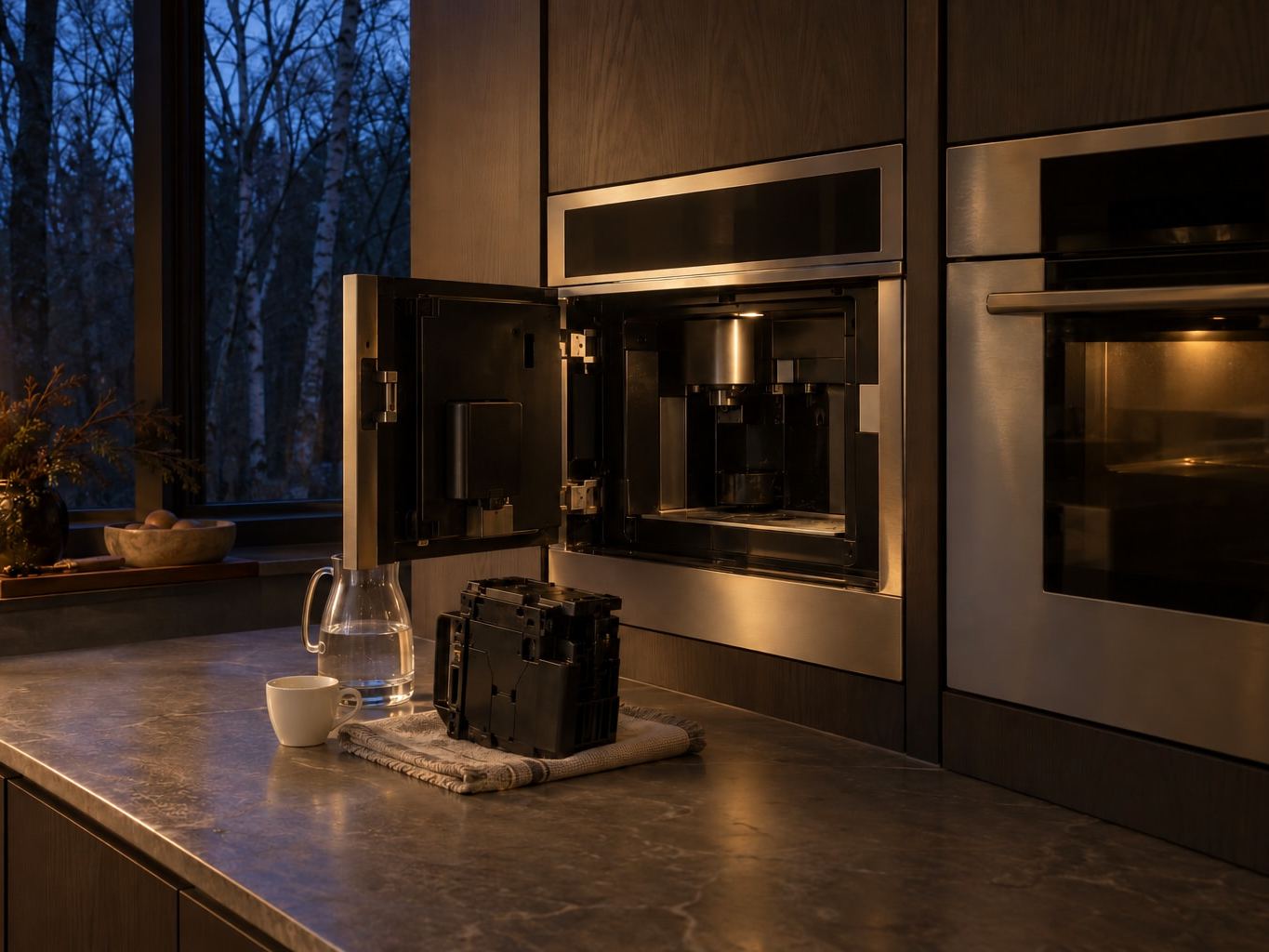
The technician starts by running the machine as you would, watching the grinder, the brew cycle and the milk side, and reading any messages on the display. Next the brew unit comes out for inspection, and the water path is checked for flow, pressure and scale. If the fault sits deeper, the unit is eased out of its cabinet opening onto a protective surface, with the surrounding panels and stone covered first.
Before anything is replaced, you get the repair cost and decide whether to go ahead. Most coffee system repairs take about an hour to an hour and a half; replacing a brew unit or running a full professional descaling can stretch toward two hours. If a part has to be ordered, the machine goes back in place and a return visit is scheduled for when it arrives.
Once the work is finished, we pull test drinks, both espresso and milk, check for leaks inside the cabinet, and reset any service warnings. With regular use, descaling every two to three months keeps most machines out of trouble, and our coffee system care article covers the daily routine in more depth.
Coffee system questions
- How often should I descale my Wolf coffee system?
- With regular use, about every two to three months. Hard water in many North Shore towns can call for more frequent descaling; the machine's own warning is a good guide, so do not let it sit on the display for weeks.
- Can you fix a Wolf coffee system without damaging my cabinets?
- Yes, that is part of the job. The technician covers surrounding panels and stone, eases the unit out only when the repair requires it, and sets it down on a protective surface. Let us know about custom trim when you book.
- Why is my Wolf coffee system leaking inside the cabinet?
- Common sources are worn internal seals, a loose hose connection or a cracked water tank. Switch the machine off, wipe up the water and keep the cabinet door open to dry. Pressure-testing the water circuit shows the exact source.
- Is the $89 charged for each appliance if you look at the coffee system and the oven?
- No. The $89 is charged once per trip, however many Wolf appliances the technician checks, and it is credited toward the repair you approve. Each repair is priced separately after inspection; see our pricing page.
- My coffee tastes burnt or bitter. Is that a repair problem?
- Sometimes. Very dark beans, an overly fine grind or a dirty brew unit are common and easy to correct. If cleaning and a coarser setting do not help, scale on the heater or a temperature fault may be the cause, and a technician can test it.
- What other Wolf appliances do you repair?
- Ranges, wall ovens, cooktops, convection steam ovens, microwaves, ventilation hoods and outdoor grills, all on the same $89 trip charge. The full list is on our services page.
Get your morning coffee back
(773) 830-2960Call (773) 830-2960 or book a visit online. Prefer to ask a question first? Our contact page has every way to reach us.
Book a visit