Wolf repair
Ignition, burners, valves, rotisserie
Wolf Outdoor Grill Repair After a North Shore Winter
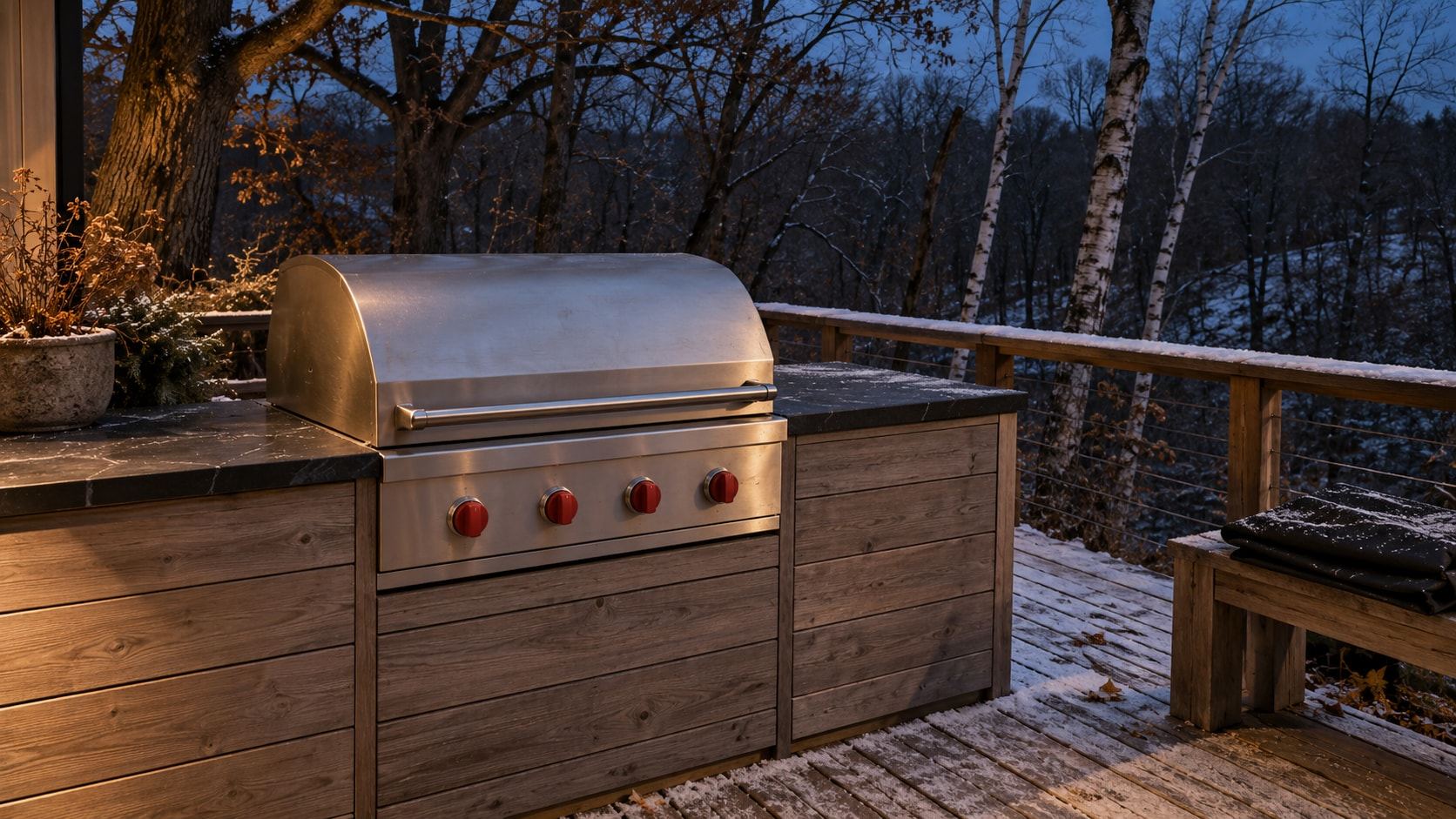
A Wolf outdoor grill is built from heavy stainless steel, but it still spends months under snow, wind off Lake Michigan and spring freeze-thaw swings. By the first warm weekend, igniters are damp, burner tubes hold insect nests and the flame comes up lazy and yellow. Northland Kitchen Service repairs Wolf grills across the North Shore of Chicago in every season, and the quiet months are the easiest time to get one ready.
Short answerWolf outdoor grill won't ignite after winter: what to check?
After a winter outside, the usual causes are a wet or corroded igniter electrode, a dead ignition battery or module, burner ports blocked by insect nests, or no gas reaching the valve. Listen for the click and look for a spark. If it clicks with no flame, or you smell gas, stop and call.
What North Shore weather does to a grill
The grill on a Lake Forest terrace does not live the life the brochure photo suggests. Local conditions shape what we find when we open the hood.
-
Freeze-thaw swings
Late winter and early spring bring days above freezing and nights below. Melt water seeps into burner ports, igniter housings and valve stems, then freezes and expands, loosening connections and cracking ceramic insulators.
-
The lakefront towns
In Lake Bluff, Lake Forest, Highland Park and Winnetka many outdoor kitchens sit near the bluffs, where damp, wind-driven air off Lake Michigan speeds up surface rust on fasteners, hinges and the underside of grates. Our Lake Bluff page covers that shoreline in more detail.
-
Wooded lots and ravines
Tall trees and shaded ravines mean leaves, seed pods and moisture settling around the grill, plus plenty of spiders and wasps looking for a sheltered tube to winter in.
-
Open inland yards
Farther from the lake, in Libertyville and Deerfield, grills on open patios take more direct wind, which pushes grit into the control area and makes covers flap loose during storms.
Grill problems that show up each season
Each sign below points to a different part of the gas train or the cooking box. The sign tells us where to start; testing tells us what to replace.
-
Knob turned, igniter clicks, no flame
Likely cause: Wet or misaligned electrode, cracked igniter insulator, or a blocked burner port
-
No click at all
Likely cause: Spent ignition battery, a failed spark module or broken wiring under the control panel
-
One side scorches while the other barely browns
Likely cause: Burner ports partly clogged, a corroded burner tube, or a valve not opening fully
-
Flame small and lazy on every burner
Likely cause: Gas regulator in low-flow mode or failing, or a restriction in the supply line
-
Rotisserie spit will not turn
Likely cause: Rotisserie motor, its power supply or a worn drive coupling
-
Constant, heavy flare-ups
Likely cause: Grease built up below the burners, a full grease tray, or damaged flame tamers and heat shields
-
Rust streaks, flaking grates, stiff lid hinges
Likely cause: Weather exposure on fasteners, grates and hardware; surface corrosion is treated, rotted parts replaced
A Wolf grill's year in this climate
Grills fail on a schedule that follows the weather. Knowing where you are in the year tells you what to watch for.
-
First warm weeks of spring
The riskiest time. Insects have nested in burner tubes, igniters are damp and hoses may have stiffened in the cold. A pre-season service catches all of that before the first cookout.
-
Early summer
Heavy use exposes weak valves and uneven burners. Uneven searing and a rotisserie that slows under load usually show up now.
-
Midsummer
Grease is the main enemy. A full tray and coated heat shields cause flare-ups, and leftover fat attracts pests once the grill cools.
-
Autumn
Time for a deep clean of the cooking box, a dry cover and a look at fasteners before the wet season. Small rust spots are much easier to deal with now than in April.
-
Winter
The grill rests, and so do most schedules. It is the easiest window for maintenance or a repair, so the grill is ready the day the snow melts.
Short answerWhy does my Wolf grill have a low flame?
When every burner runs small and yellow, the gas supply is the suspect: a regulator that dropped into low-flow mode or is failing, a kinked or restricted line, or a nearly empty propane tank. When only one burner is weak, look instead at clogged ports or that burner's valve. A technician measures the supply and isolates the cause.
Two safety rules for outdoor gas
Gas safety
Insects in the tubes, and any smell of gas
Spiders and other insects like to build webs and nests inside burner tubes over the winter. A blocked tube can push the flame back toward the controls and start a fire behind the panel, so a grill that lights unevenly or makes a fluttering sound after a long rest should be checked before anyone cooks on it. If you smell gas around the grill, treat it as a gas emergency.
- Do not touch the grill knobs, the tank valve, light switches or anything that could spark, and do not try to light the grill.
- Move away from the grill right away; if the smell reaches indoors, leave the house as well.
- From a safe distance outside, call your gas utility or 911.
- Call us only after the utility or fire department has made the area safe.
Winter tune-up or mid-season repair
We repair Wolf outdoor grills all year, so the question is not whether we can come, but when it suits you.
Service in the off-season
- Burner tubes cleared of nests before anything can flash back
- Igniters, valves and hoses checked with no party on the calendar
- Rust treated while it is still on the surface
- Any part that has to be ordered arrives before spring, not halfway through it
Repair during grilling season
- You call when something has already failed, often before a planned cookout
- Grease and heat make some faults easier to spot, but the grill must cool before work
- A part on order can sideline the grill for part of the summer
- Still worth doing; we just plan the visit around your schedule
An annual check before the season is what we recommend, and winter is the calmest time to do it. If the grill quits in July, call anyway; the $89 trip charge is the same in any month and counts toward the repair.
Short answerWho repairs outdoor grills on the North Shore of Illinois?
Northland Kitchen Service repairs Wolf outdoor gas grills in Lake Forest, Highland Park, Deerfield, Libertyville, Lake Bluff and Winnetka, year-round. Phones are answered 24/7, technicians visit every day, 8 AM to 6 PM, and the $89 trip charge is credited toward the repair. You get the exact price after inspection, before any work starts. We work on Wolf equipment only.
Before the technician arrives
A few minutes of preparation makes the visit faster and the diagnosis more accurate.
- Let the grill cool completely if it was used recently
- Clear the grill top, side burners and the area around the cart or island
- Know whether the grill runs on natural gas or a propane tank, and make sure the tank is not empty
- Note which burners misbehave and whether the igniter clicks
- Have the cover off and any outdoor-kitchen cabinet below unlocked
- Mention other Wolf appliances that need a look; the trip charge covers the whole visit
Questions grill owners ask
- Can a Wolf outdoor grill be repaired in winter?
- Yes. We work on outdoor grills year-round, and winter is often the easiest time because nobody is waiting to cook. As long as the grill can be reached safely, the technician can diagnose and repair it in the cold.
- How do I keep insects out of my grill's burner tubes?
- A dry, fitted cover helps, and so does running the grill hot for a few minutes after each cookout to burn off residue. The real fix is a check before the first use of the season, when tubes are inspected and cleared. Our seasonal grill care article walks through the routine.
- Is surface rust on my Wolf grill a reason to replace it?
- Usually not. Stainless steel can show surface rust and tea staining near the lake, and most of it can be cleaned and treated. Grates, flame tamers, fasteners and hinges that are rusted through are replaced individually. We tell you what is cosmetic and what affects safety.
- Can the same visit cover my indoor Wolf range?
- Yes. The $89 is charged once per trip, not per appliance, so the technician can look at the grill and an indoor Wolf range in one visit. Each repair is quoted on its own after inspection; details are on our pricing page.
Have the grill ready before the first cookout
(773) 830-2960Call (773) 830-2960 or book a visit online. Questions about scheduling or access? Reach us through the contact page.
Book a visit